One Ring to Dinner: The Lost Art of Steam-Stacking on a Student Hob
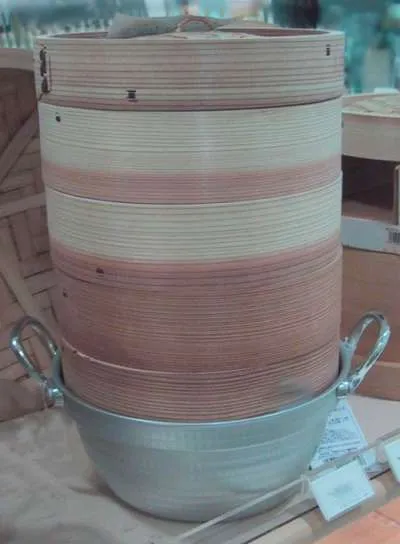
Photo: Unknown, CC BY-SA 3.0, via Wikimedia Commons
Every rented flat in Britain has the same kitchen. One hob that clicks four times before it lights, an oven that runs hot at the back, and absolutely no room for a bamboo steamer, a slow cooker and a rice cooker to live together. If that's your setup, I have good news: you've been sitting on a technique that Chinese home cooks have used for generations, and it turns your single ring into a full dinner engine.
It's called steam-stacking, and the idea is simple. You've got something simmering in the pot — a stew, a curry, a braise. Above it, you stack a rack, then a plate or basket, then another rack, then another layer. The steam rising off the stew cooks everything above it while the stew bubbles away below. One ring, one pot, three components of dinner, all done at once.
Why This Works in a British Kitchen
The classic version of this in a Chinese household is the big pot of soup or braised pork with a steaming trivet balanced inside, rice or buns sitting above. Nothing wasted, nothing needing a second burner. In a flat in Salford or a halls kitchen in Leeds, the logic translates perfectly: your hob is precious real estate, so every pot should be doing two jobs.
It's also cheap. You don't need a bamboo steamer (though it's lovely). You need a folding steaming rack, a heatproof plate, and a lid that fits loosely over the whole stack.
The £10 Steaming Kit
- Folding stainless steel steaming rack — the flower-shaped, collapsible kind. £2–3 at any Asian supermarket, or Wilko/Homeware sections of larger supermarkets.
- A heatproof plate or shallow dish — whatever you own that fits inside the pot. Ceramic is fine; Pyrex is not (thermal shock).
- Baking paper — for lining the plate so dumplings don't weld themselves on.
- A lid — your pot's own lid, or a wok lid, or failing that a foil tent.
That's it. Total spend: less than a takeaway delivery fee.
The Timing Chart (Pin This Bit)
Everything below assumes a rolling simmer underneath and a reasonably sealed lid:
| Food | Steam time over a simmering pot |
|---|---|
| Frozen dumplings (from supermarket) | 10–12 mins |
| Shop-bought bao buns (steamed type) | 8–10 mins |
| Tenderstem broccoli, halved lengthways | 5–6 mins |
| Pak choi, halved | 4–5 mins |
| Eggs in shells (for the stew) | 9–10 mins |
| Cold rice, reheated with a splash of water | 5–6 mins |
Rule of thumb: dense things go on the bottom layer, delicate greens on top, and anything frozen gets a couple of extra minutes.
Three Build-Your-Own Dinner Formulas
1. The Braised Pork & Bao Night
Base: pork shoulder or belly chunks browned, then simmered 40 minutes with soy sauce, star anise, a spoon of sugar, ginger and a splash of rice wine.
Stack: on the rack above, four shop-bought bao buns on baking paper. Last five minutes, lift the lid and tuck in pak choi halves alongside.
Serve: buns stuffed with pork, greens alongside, a spoonful of the braising liquid over everything. Feels like a restaurant; costs about £2.50 a head.
2. The Dumpling & Egg Miso Situation
Base: a quick broth — miso paste whisked into stock with sliced mushrooms, a knob of butter if you're feeling fusion-y, and two whole eggs dropped in to hard-boil in the broth.
Stack: frozen dumplings above, starting them at the ten-minute mark.
Serve: peel the eggs, halve them into the broth, dumplings on the side with a dipping bowl of soy and chilli oil. Twenty-five minutes, one ring, zero washing-up mountain.
3. The Coconut Curry Greens Stack
Base: a tin of coconut milk simmered with curry powder, garlic, fish sauce and whatever root vegetables need using.
Stack: cold cooked rice in a heatproof bowl (with a splash of water) on the bottom rack, tenderstem broccoli on a plate above it.
Serve: rice fluffed and steamed back to life, greens still bright, curry spooned over. The rice trick alone — reheating leftover rice by steaming it, never microwaving — is worth the price of the rack.
A Few Rules of the Stack
Don't let the pot boil dry — top up with hot water from the kettle if the stew looks thick. Keep the lid slightly ajar if things are steaming too fast. And resist the urge to peek: every lift of the lid adds a minute.
The first time you pull a full dinner — stew, buns and greens — off one ring in a kitchen the size of a phone box, you'll wonder why anyone bothers with four burners. Your landlord's cheapest hob just became the best chef in the house.