Curry Sauce, Chips and a Bit of History: The Side Order That Built the British Chinese Takeaway

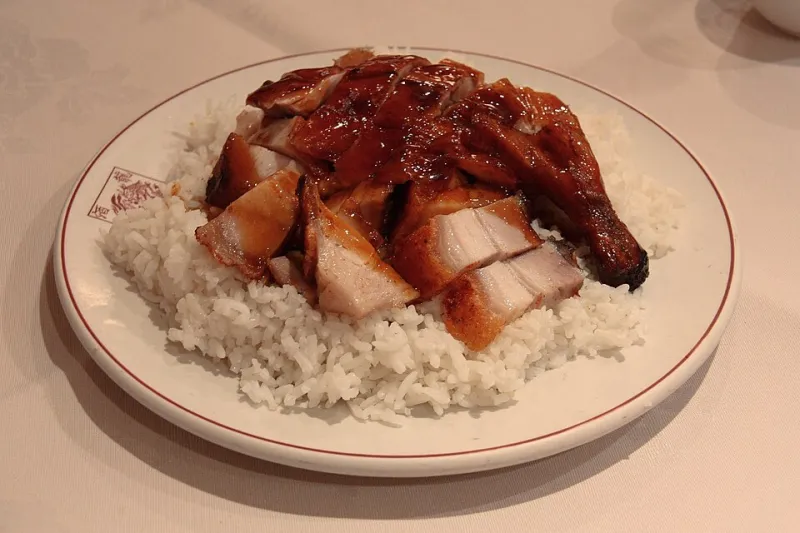
Photo: N Chadwick , CC BY-SA 2.0, via Wikimedia Commons
There's a moment familiar to anyone who's ever queued up on a Friday night in a British Chinese takeaway: you order the salt and chilli ribs, the special fried rice, and then — almost without thinking — you add, "and a portion of chips, please." Nobody questions it. The person behind the counter doesn't blink. It's on the menu, between the pancakes and the prawn crackers, printed in the same font, priced at £2.20 or thereabouts.
And yet, if you mentioned chips to a family cooking dinner in Guangzhou or a night market stall in Taipei, you'd get a puzzled look. So how did the humble fried potato become the unofficial national side dish of Chinese food in Britain?
It Started With a Port Town and a Bold Move
The story most food historians tell begins in the early twentieth century, when Chinese seamen settled in ports like Liverpool, Cardiff and London's Limehouse. Cooking for their own communities was one thing; feeding British sailors and dockworkers was quite another. The menus that emerged were quietly, deliberately flexible — familiar noodles and rice dishes sitting alongside things the British palate already trusted.
After the Second World War, and especially through the 1950s and 60s, Chinese restaurants spread out from the ports into towns and suburbs across the country. The families running them made shrewd decisions. They watched what customers ordered, what came back half-eaten, what got asked for "on the side." And they adapted.
Chips were the obvious bridge. Britain was already a fish-and-chips nation; the chip shop was the country's original takeaway. Serving chips alongside chow mein wasn't dilution — it was a handshake. We'll cook you something new, the menu said, but here's something you already love, just in case.
The Dishes That Were Invented for a Postcode
What fascinates me most about this era is how local it all was. There was no head office, no franchise playbook. Each takeaway invented its own compromises, and many of those inventions became regional traditions.
I spoke to three longtime owners for this piece — one in Manchester, one in a Kent market town, one on the south coast — and all three had dishes on their menus that exist nowhere else in quite the same form. Mr Chan, who's run his shop for 38 years, told me about the "Manchester special" his father devised: fried rice topped with gravy because the mill workers nearby asked for it "like they'd get at the cafe." Down in Kent, the owner told me curry sauce on chips was her mother's most-ordered item by a mile — locals would order a portion of chips purely as a vehicle for it.
That's the bit people miss when they sneer at fusion food. These weren't chefs failing to cook authentic Chinese cuisine. These were cooks reading a room, brilliantly, for decades. The chicken balls, the chips, the curry sauce — they're not mistakes. They're answers to questions British customers were actually asking.
Curry Sauce: The Great Unifier
Let's give curry sauce its proper dues. The version you get in a British Chinese takeaway — glossy, golden, faintly sweet, thick enough to cling to a chip — exists nowhere in Asia in quite that form. It's a descendant of the curry powders traded through British ports, mellowed and thickened until it became something genuinely its own.
And it works both ways. Ask any Chinese takeaway owner and they'll tell you the curry sauce goes over rice and chips in roughly equal measure. It's the one dish on the menu that belongs to both traditions at once, which is perhaps why it endures while so many trendier things come and go.
So Stop Apologising for the Chips
There's a particular kind of food snobbery that treats the chip side order as embarrassing — something to hide from your more culinarily adventurous friends. I think that's exactly backwards.
The British Chinese takeaway is one of this country's great culinary institutions. It fed shift workers and students and families for generations, often run by families working seven-day weeks to make it happen. The chips on the menu aren't a stain on that record. They're evidence of it — proof of two food cultures meeting in the middle and building something neither could have made alone.
So next Friday, order the chips. Get the curry sauce. And eat it without a shred of guilt, because you're not ordering a compromise. You're ordering history — crispy, golden, and £2.20 a portion.