The Jar Kimchi Left Behind: Tianjin Vegetable, Fermented Bean Curd and Britain's Missing Ferments

Photo: Bernard Gagnon, CC BY 4.0, via Wikimedia Commons
Somewhere in the last decade, Britain fell properly in love with fermentation. Kimchi sits in Sainsbury's next to the halloumi. Sauerkraut has a posh artisan version in every farm shop from Bristol to Buxton. Kombucha taps have appeared in pubs that five years ago were firmly on the lager and pork scratchings plan.
And yet. Wander into any Chinese supermarket in Manchester, Birmingham or Soho and you'll find shelves of ferments with centuries more history than our beloved kimchi — jars and packets that barely register on the British radar. Chief among them: a humble tin of shredded vegetables that goes by the unglamorous name of Tianjin vegetable.
It's time we talked about it.
So What Actually Is Tianjin Vegetable?
Don't be fooled by the name — there's no single 'Tianjin vegetable'. The tin (and it's usually a tin, though vacuum packs exist) contains shredded mustard stem, salted and fermented until it develops a savoury, slightly funky, deeply umami character. Think of it as sitting somewhere between a cornichon and an anchovy: salty, sharp, and designed to make everything around it taste more like itself.
It hails from Tianjin, the port city east of Beijing, and it's been a staple of northern Chinese kitchens for generations. Working-class families have spooned it over congee for breakfast for over a hundred years. It costs about £1.50 a tin. It keeps for ages. And it might be the cheapest flavour upgrade in your local Chinese supermarket.
The classic tin to look for is the one with the picture of a pagoda on it — you'll spot it once you know what you're hunting. Some versions are spiced with chilli; the plain ones are more versatile.
Why Hasn't It Had Its Kimchi Moment?
Honestly? Presentation. Kimchi arrived in Britain looking photogenic — vibrant red, chunky, spoonable, Instagram-ready. Tianjin vegetable arrives in a dented tin with 1970s typography and a suspicious-looking brine. There's no marketing budget. There's barely a label in English.
But there's also a subtler reason: Chinese ferments tend to be seasoning ferments rather than side dish ferments. In the Chinese kitchen, you don't usually serve a bowl of Tianjin vegetable on its own — you cook with it. That's a different habit to learn, and it's exactly where British cooks can have some fun.
Five Ways to Use It Without Thinking Twice
1. Stir it through fried rice. Rinse a couple of tablespoons, chop roughly, and toss it in with your egg and rice at the end. It behaves like the world's most assertive bacon bit.
2. Add it to a cheese toastie. Yes, really. Rinse well, pat dry, chop finely, and mix with grated cheddar before grilling. It's the grown-up cousin of the pickle-and-cheese sandwich.
3. Perk up a Sunday roast gravy. A teaspoon of the brine plus a few chopped shreds stirred into your pan drippings adds a savoury depth that'll have people asking what the secret is. Say it's your grandmother's technique. We won't tell.
4. Mash it into butter. Softened butter, chopped Tianjin vegetable, a drop of sesame oil — now you have a steak butter with a difference.
5. Congee, obviously. If you've got a rice cooker (and per our previous coverage, you should), leftover rice plus water plus a tin of this shredded over the top is the ultimate cold-weather breakfast.
The Supporting Cast: Two More Ferments Worth Knowing
Fermented bean curd (fu ru). Small cubes of bean curd preserved in brine, wine and rice — sometimes red, sometimes white. It tastes like the love child of blue cheese and miso. Mash a cube into a marinade for pork belly, whisk it into a dressing for blanched greens, or spread a whisper of it on toast if you're feeling brave. Chinese grandmothers call it 'the cheese of the East', and one jar lasts months in the fridge.
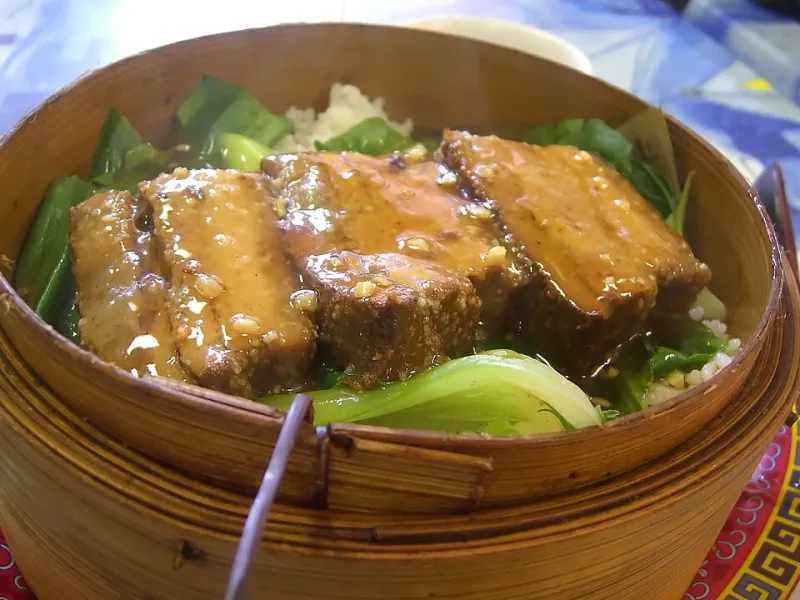
Dried mustard greens (mei cai / zha cai's leafier cousins). Sold in vacuum packs, these salted and dried greens are the backbone of classics like mei cai kou rou (steamed pork belly with preserved greens). Soak, chop, and braise — or, for a weeknight shortcut, stir soaked and chopped greens into a simple pork and rice bowl. They bring a sweet-salty-sour tang that fresh veg simply can't.
Where to Buy Them in the UK
You don't need to live near a Chinatown. Nearly every mid-sized town has a Chinese supermarket — Wing Yip, See Woo, Loon Fung, or your local independent — and all three ingredients are shelf staples. Expect to pay:
- Tianjin vegetable: £1.20–£2 a tin
- Fermented bean curd: £1.50–£3 a jar
- Dried mustard greens: £2–£3.50 a pack
Some larger branches of Asda and Tesco stock zha cai in their world food aisles, and online retailers like Wai Yee Hong deliver nationwide. Start with the tin. It's the gateway.
A Small Manifesto
There's a pattern here worth noticing: Britain embraced the ferments that arrived with a story we could tell easily — Korean, trendy, probiotic, good for the gut. The Chinese ferments never got that PR push, so they stayed where they've always been: in the tins and jars of neighbourhood shops, quietly doing the heavy lifting in millions of home kitchens.
Buying them isn't just about flavour, though the flavour is genuinely brilliant. It's about widening the pantry beyond what the supermarket buyers think we can handle. A £1.50 tin of salted mustard stem is a hundred years of breakfast tradition, sitting there waiting.
Open the tin. Rinse a forkful. Fry it with your eggs tomorrow morning and see what you've been missing.
Your kimchi will understand. It's secure enough in its fame.